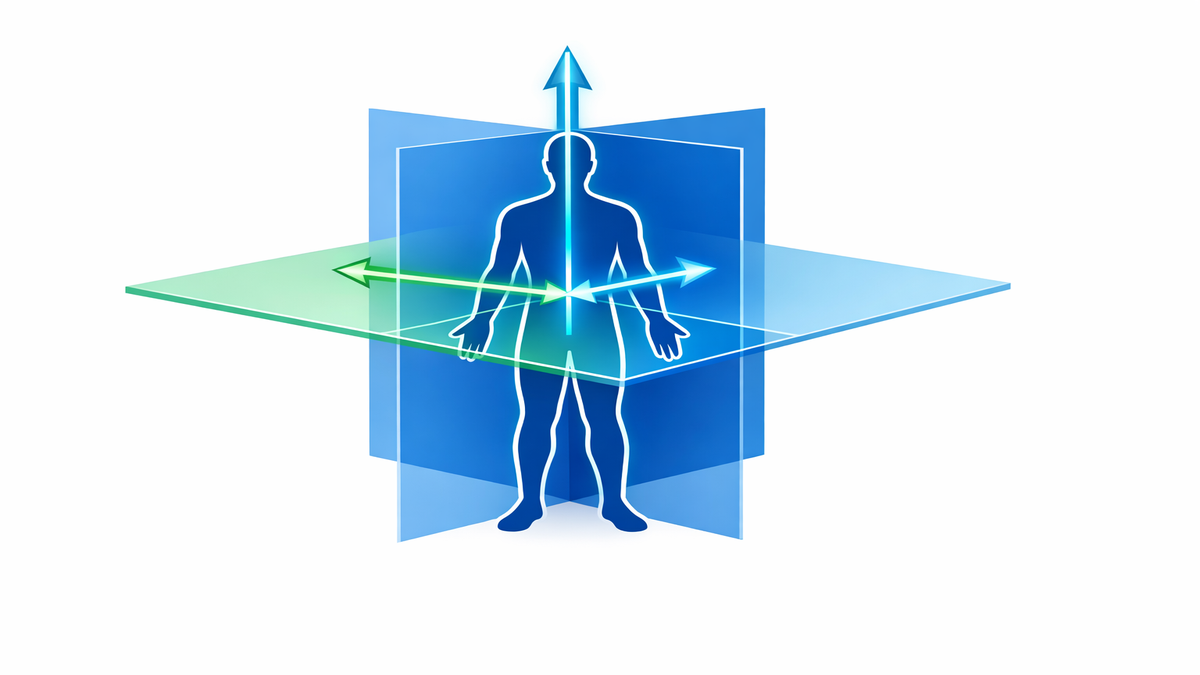
Anatomical directional terms are the GPS coordinates of the human body. Radiologists, surgeons, and nurses use these words constantly to describe exactly where something is located — without ambiguity. When you understand terms like anterior, medial, and proximal, radiology reports and physical therapy notes start to make a lot more sense. Answer all eight questions below, read the explanations, and you will have a solid foundation for decoding location-based medical language.
Interactive Quiz0/8 answered
Question 1 of 8
In standard anatomical position, the palms face:
Explanation: Anatomical position: body upright, arms at sides, palms facing forward (anteriorly). This is the reference starting point for all directional terms.
Question 2 of 8
Anterior means:
Explanation:Anterior = toward the front of the body. Your sternum is anterior to your spine.
Question 3 of 8
Posterior is the opposite of anterior and means:
Explanation:Posterior = toward the back. Your shoulder blades (scapulae) are on the posterior side of your trunk.
Question 4 of 8
Medial describes a structure that is:
Explanation:Medial = toward the midline. Your nose is medial to your ears.
Question 5 of 8
Lateral means:
Explanation:Lateral = away from the midline. Your ears are lateral to your nose.
Question 6 of 8
In the arm, proximal means:
Explanation:Proximal = closer to the trunk or point of attachment. The elbow is proximal to the wrist.
Question 7 of 8
Distal is the opposite of proximal. In the leg, the ankle is distal to the:
Explanation:Distal = farther from the trunk. The ankle is distal to the knee — meaning it is farther from where the leg attaches to the hip.
Question 8 of 8
The sagittal plane divides the body into:
Explanation: The sagittal plane runs vertically and divides the body into left and right portions. A mid-sagittal (median) plane splits it into equal halves.